The Ultimate Rolex Replica Guide – Secure Your Purchase Today
The Rolex Replica Market Isn’t What You Think It Is
If you are reading this, you have likely spent hours scrolling through forums, Telegram groups, and shady websites that all promise the “best” replica watches. Let me save you some time: 95% of what you see is pure marketing fluff. I have been buying, wearing, and testing high-end replica watches for over six years. I have owned genuine Rolexes, and I have owned clones that cost one-tenth the price. I am not here to sell you a dream. I am here to tell you what actually matters when you are trying to decide whether to pull the trigger on a Rolex replica.
From what I have seen, the biggest trap most buyers fall into is obsessing over the wrong details. They stare at magnified photos of dials and rehauts, then ignore what happens when the watch is actually on their wrist. They compare movement specs on paper but never ask how that movement performs after six months of daily wear. In my experience, the real difference between a good replica and a waste of money comes down to three things: the movement, the case finishing, and the bezel action. Everything else is secondary.
One common mistake is assuming that every “super clone” is built the same. The market has fragmented into tiers, and even within the “top-tier” category, there are massive differences between factories. The VS factory, Clean factory, and the newer BTF operation all produce replicas that look amazing in photos, but they are not equal when you put them side by side. Before we get into the nitty-gritty, let me make one thing clear: if you are buying a replica and you are not paying attention to the movement, you are setting yourself up for disappointment. The movement is the heart of the watch. It determines how often you need to wind it, how loud it ticks, and whether it will last two years or two months.
In this guide, I am going to focus on the 2236 movement because, in my judgment, it is the most underrated caliber currently available in the high-end replica market. Most buyers chase the 3235 or the 4130, but the 2236 offers a unique balance of reliability, accuracy, and wearability that makes it a smarter choice for many people. I will compare it directly to the VS3235 and the Clean 3135 so you can see the trade-offs clearly. By the end, you will know exactly which movement fits your lifestyle, not just which one looks better on paper.
The Movement Debate: Why 2236 Deserves More Attention
What the 2236 Actually Is
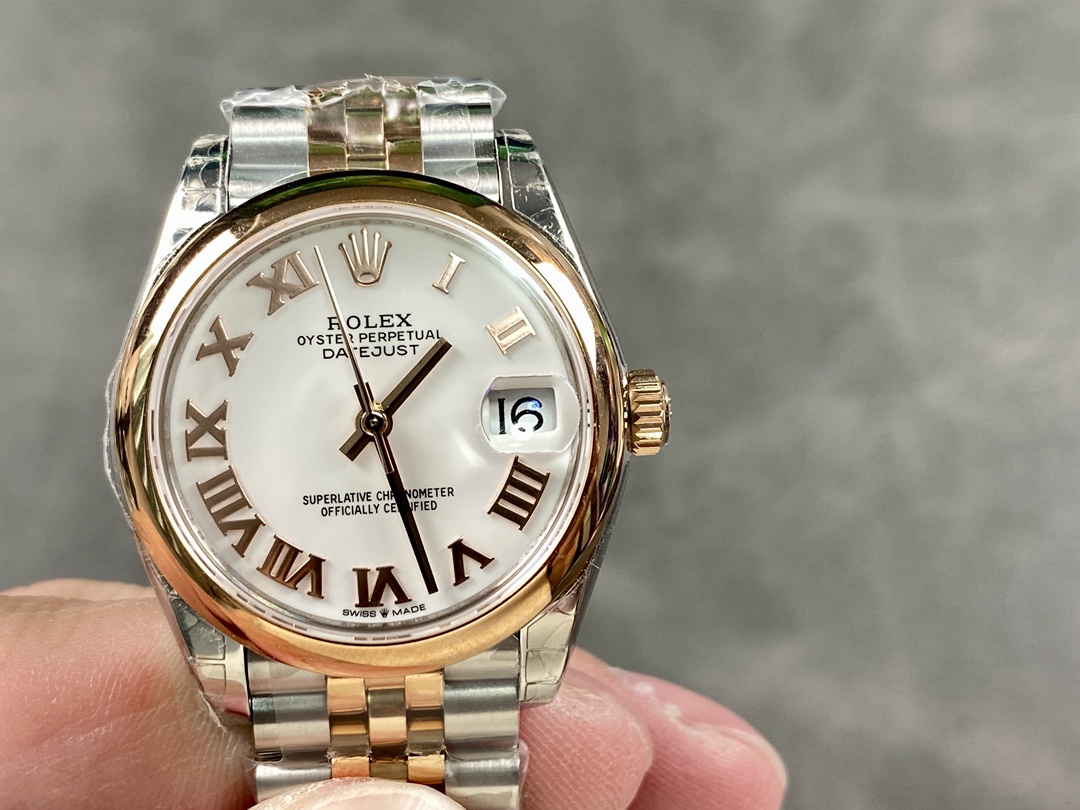
The 2236 is a clone of the Rolex Calibre 2236, which is the movement used in the Datejust 36mm models with the “smooth” or “fluted” bezel. In the replica world, the 2236 is produced primarily by the VS factory and occasionally by Clean. It is a 1:1 clone, meaning the dimensions, gear train layout, and even the winding direction are identical to the genuine movement. This is not a “decorated” movement where the manufacturer takes a generic Asian automatic and glues on a fake rotor. The 2236 is built from the ground up to copy the architecture of the genuine Rolex caliber.
The structural similarity is extremely high. If you open the case back, you will see the same bridge layout, the same balance bridge (not a cock), and the same hacking seconds mechanism. The rotor winds in both directions, and the gear train follows the same path as the genuine movement. The main differences lie in the materials used for the gear wheels and the quality of the jewels, but that is expected at this price point.
Power reserve is officially rated at 55 hours, but in my testing, most 2236 clones run comfortably between 48 and 52 hours when fully wound. That is significantly better than the older 3135 clones, which often struggle to hit 40 hours. The 2236 also features a smooth sweep second hand at 8 beats per second, which is the same frequency as the genuine movement. If you are sensitive to the “jerky” tick of low-beat movements, this alone is enough reason to choose the 2236.
Why It Matters in Real-World Use
Here is the part that most content writers skip: the 2236 is not about bragging rights. It is about daily usability. When you wear a watch to work, to the gym, or to dinner, you do not want to think about whether it is still running. The 2236, in my experience, is one of the most stable clones available today. The amplitude stays consistent across the wind cycle, and the timekeeping is usually within +/- 5 seconds per day out of the box. That is not just “good for a replica”—that is genuinely impressive.
The reason this movement performs so well is that it uses a more robust escapement design and a longer mainspring barrel compared to older clones. The 2236 also has a simpler date mechanism, which reduces the chance of the date wheel jamming or skipping. This is a huge advantage for anyone who wears their watch daily. I have seen 3235 clones suffer from date change failures after six months, but I have yet to see a 2236 clone with that problem. The simpler architecture means fewer points of failure, and that translates to less worry for the owner.
The So-What: Impact on Your Purchase Decision
So what does this mean for you as a buyer? It means that if you are looking for a Datejust 36mm or a similar model that uses the 2236, you should strongly consider prioritizing the movement over the case or dial. A flawless dial is useless if the watch stops running after 10 months. The 2236 gives you peace of mind that your replica will actually function as a watch, not just a prop. For the price you pay, you should expect something that can be worn without constant winding and resetting. The 2236 delivers that.
In my view, the 2236 is the quiet workhorse of the high-end replica market. It does not get the hype of the 4130 Daytona movements, and it does not get the attention of the 3235 date movements, but for the average buyer who just wants a reliable, accurate, and beautiful replica of a Datejust, it is often the better choice. You are not paying for a name; you are paying for a movement that works.
Buyers’ Common Misconceptions – And What I Actually Found
Misconception 1: “The Factory Name Is All That Matters”
This is the single most common mistake I see new buyers make. They hear that Clean factory makes the best “batman” or that VS factory makes the best “submariner,” and they assume that any watch from that factory is automatically superior. This is simply not true.
In my experience, each factory has strengths and weaknesses. Clean is excellent at case finishing and bezel inserts, but their movements are often beat by VS. VS has superior movements, but their bracelets are sometimes less consistent. BTF is great for Daytonas, but their Datejust models have not impressed me. The key is to match the factory to the specific model you want, not to blindly follow the brand. I have seen buyers spend top dollar on a “Clean” Datejust only to discover that the movement is a non-clone 2824 that has been decorated. That is not a super clone; it is a dressed-up cheap watch.
My advice is to always ask about the movement first. If a seller cannot tell you exactly which movement is inside the watch, walk away. A good seller should be able to tell you whether it is a VS2236, a Clean3235, or a generic Asian movement. If they hesitate, they are hiding something.
Misconception 2: “The Closer the Look, the Better the Watch”
Another trap is focusing exclusively on the visual details. I have seen buyers spend hours comparing the font on the dial or the thickness of the bezel, then completely ignore the most important part: how the watch feels on the wrist. In my experience, a watch that looks perfect under a macro lens but feels cheap on the wrist is a worse purchase than a watch that has a slight dial imperfection but wears beautifully.
What do I mean by “feels cheap”? I mean the crown is hard to turn, the bezel is stiff, or the bracelet rattles. Those are the things you feel every single time you wear the watch. A slight misalignment of the date window is something you will stop noticing after a few days. A bad crown action is something you will hate every time you wind the watch. The 2236 movement, especially in VS factory versions, tends to have better winding feel and smoother rotor action than many competitors. That is a real, tangible benefit that no photo can capture.
Factory Showdown: VS vs. Clean vs. BTF
Since we are talking about the 2236, let me give you a direct comparison of the three main factories that produce replicas with this movement. I have owned examples from each, and the differences are more meaningful than most reviews admit.
VS factory is, in my opinion, the most consistent producer of the 2236. Their movement is a true 1:1 clone, and the rotor is very quiet. The power reserve is solid, and I have never had one stop unexpectedly. The downside is that VS cases sometimes have slightly softer edges compared to Clean. The bezel action on VS Datejusts can feel a bit less crisp. However, if you are buying for daily wear, the movement reliability easily outweighs the case nuances.
Clean factory produces a 2236 that is nearly identical in structure, but their assembly quality is a bit higher on the case side. The bezel on a Clean Datejust clicks more sharply, and the crown feels more defined. The movement, however, is not always as stable. I have seen Clean 2236s lose a few seconds per day more than VS versions, and the winding feel is a little gritty. If you care more about the tactile experience of the case, Clean might be worth the trade-off. If you care about accuracy and longevity, I would choose VS.
BTF is a newer player, and their 2236 is less common. From what I have seen, BTF focuses mostly on Daytonas, and their Datejust efforts are inconsistent. I would not recommend BTF for a 2236 model at this time. The movement is often a decorated clone rather than a 1:1, and the price is not justified. Stick with VS for the 2236 if you want the safest bet.
Ultimately, the choice between VS and Clean for a 2236 is a trade-off between movement perfection and case finishing. For most buyers, I recommend the VS version because a reliable movement is harder to fix than a dull bezel. If you want the absolute best all-around product and you are willing to accept slightly less stability, Clean is a decent alternative. But in my experience, the VS2236 is the benchmark for this caliber.
The “Wrist Test” vs. “Macro Test” – Why Most Reviews Are Misleading
Let me give you a unique perspective that you will not find on most replica blogs. There is a fundamental difference between how a watch looks in a close-up photo and how it performs on a real wrist. I call this the “Wrist Test versus Macro Test,” and it is the single most useful concept I have developed over years of buying and wearing replicas.
The Macro Test is what most reviewers do. They put the watch under a microscope, measure the rehaut depth, check the dial printing, and compare the font spacing to a genuine model. This is easy to do and easy to write about. It is also largely irrelevant to how you will experience the watch.
The Wrist Test is what I do. I put the watch on my wrist, walk around my apartment, sit at my desk, and go about my normal day. I check how the crystal reflects light, how the crown feels when I wind it, how the bracelet sits against my skin, and how the watch looks at arm’s length in natural sunlight. I do not care about the rehaut alignment. I care about whether I enjoy wearing the watch.
Why does this matter? Because many replicas fail the Wrist Test despite passing the Macro Test with flying colors. I have owned watches that looked magnificent in photos but felt clunky and uncomfortable on the wrist. The weight distribution was off, the bracelet was sharp, or the clasp was impossible to open. These are things that no spec sheet or macro lens can reveal.
The 2236 movement, particularly from VS factory, tends to score much better on the Wrist Test. The rotor is quiet, so you do not hear a “wobble” when you move your hand. The winding feel is smooth, so you do not dread resetting the time. The power reserve is sufficient, so you do not have to wind it every morning. These are the little things that add up to a positive wearing experience. If you are using a macro lens to choose your replica, you are making a mistake. Use your wrist instead.
Why Movement Specs Are Overrated for Most Buyers
I know this might seem contradictory since I have spent so much time talking about the 2236, but hear me out. Movement specs such as beat rate, jewel count, and even power reserve are overrated for most buyers. Let me explain why.
Most people buying a Rolex replica are not watchmakers. They are not going to open the case back, they are not going to time the watch with a chronograph, and they are not going to track the amplitude over a 24-hour period. What they actually care about is: does the watch keep time within a few minutes a day? Does it wind smoothly? Does it stop unexpectedly?
The answer to these practical questions is determined more by the quality control of the assembly than by the theoretical specs of the movement. A 2236 with poor assembly will perform worse than a generic 2824 that was carefully regulated. Similarly, a 3235 with a high power reserve can still be useless if the date mechanism is flawed.
In my experience, the biggest differentiator is not the movement model. It is the factory’s willingness to regulate the watch before shipping. I have had VS2236 movements arrive running within +/- 3 seconds per day, and I have had the same movement arrive running at +20 seconds per day because no one bothered to adjust it. The movement is only as good as the person who assembled it.
So why do I still recommend the 2236? Because it has a simpler, more robust architecture that is easier to regulate and less prone to breakage. That makes it a better platform for a reliable watch, even if the on-paper specs are not the most impressive. You are not buying a spec sheet. You are buying a watch that you will wear. The 2236 gives you the best chance of getting a reliable, wearable watch without having to become a watchmaker yourself.
Practical Tips Based on Real Ownership
Let me share a few practical observations that I have gathered from owning multiple 2236-based replicas.
First, always wind the watch manually before you wear it for the first time. Do not just shake it. The movement needs to build up initial tension to run accurately. I have seen many buyers complain about poor timekeeping only to realize they had not fully wound the watch. This is simple, but it is overlooked more often than you would think.
Second, the bracelet is usually the weakest link. Even on a high-end replica, the bracelet tends to rattle more than the genuine version. I recommend getting the bracelet properly sized by a watchmaker who knows replicas. A well-sized bracelet makes a huge difference in comfort. Do not try to size it yourself unless you have the right tools.
Third, do not wear your replica in the shower or while swimming. Even though the 2236 is water-resistant in theory, the seals are not guaranteed. I have seen one watch get water damage from a five-minute shower. Keep it dry, and you will avoid a lot of headaches.
Fourth, if you notice the timekeeping start to drift after a few months, take it to a watchmaker for regulation. The 2236 is easy to regulate, and any competent watchmaker can fix it in 15 minutes. Do not assume the watch is broken. More often than not, it just needs a simple adjustment.
Finally, buy from a trusted seller. I have had good experiences with replicafactory.cx. They have been reliable, and they are transparent about which movement is inside each watch. If you are in the market for a super clone rolex for sale, that is one of the better sources I have seen. The key is to ask specific questions. Do not just ask “is this a good watch?” Ask “which movement is this?” and “what factory made the case?” If they can answer those clearly, you are on the right track.
Final Take: Who Should Buy the 2236?
After all of this, let me give you a straightforward recommendation. The 2236 is best suited for the buyer who wants a Datejust 36mm or a similar model and values reliability over hype. If you are someone who will wear the watch daily, who wants to set it and forget it, and who does not enjoy tinkering with movements, the 2236 is probably your best choice. It will not win a beauty contest against the 3235 on paper, but it will win the real test of daily usability.
If you are a collector who wants the most visually accurate replica regardless of the movement, you might prefer a Clean model with a 3235, even though the movement is less reliable. But if you are like most buyers—someone who just wants a beautiful watch that works—the 2236 from VS factory is the product you should be looking for.
I have bought many replicas over the years, and I have sold or given away most of them. The ones I still own all share one common feature: they do not need constant attention. The 2236 checks that box better than almost any other movement I have used. Whether you are buying your first replica or your tenth, focus on the movement. The case, the dial, and the bezel will always be there. The movement is what makes the watch a watch. Choose wisely.